
ADA Office Signage Explained

When you walk into an office building, you may notice certain signs that look a little different. Some have raised letters, others include Braille, and many use strong color contrast to make them easier to read. These are known as ADA signs, and they serve an important purpose.
While they may seem like a small detail, ADA office signage helps make workplaces accessible and easy to navigate for everyone.
What ADA Means
ADA stands for the Americans with Disabilities Act, a law passed to ensure people with disabilities can access public spaces safely and independently. This includes offices, schools, hospitals, and many other buildings open to the public.
Part of the law requires certain signs to follow accessibility guidelines. These signs help people who are blind, visually impaired, or have other disabilities find their way around a building without needing assistance.
In simple terms, ADA signage is designed to make buildings easier for everyone to use.
Why ADA Office Signs Are Important
Imagine entering a large office building for the first time and trying to find a restroom or conference room without clear signage. It can already feel confusing. Now imagine doing that with limited vision.
ADA signs help remove that challenge by providing information in multiple ways. Raised letters allow people to read signs by touch, while Braille provides another way for blind individuals to understand what a sign says. Strong color contrast also makes signs easier to read for people with low vision.
Because of these features, ADA signage helps people navigate buildings more safely and confidently. It also helps businesses create a more welcoming and inclusive environment for employees, clients, and visitors.
What Makes a Sign ADA Compliant
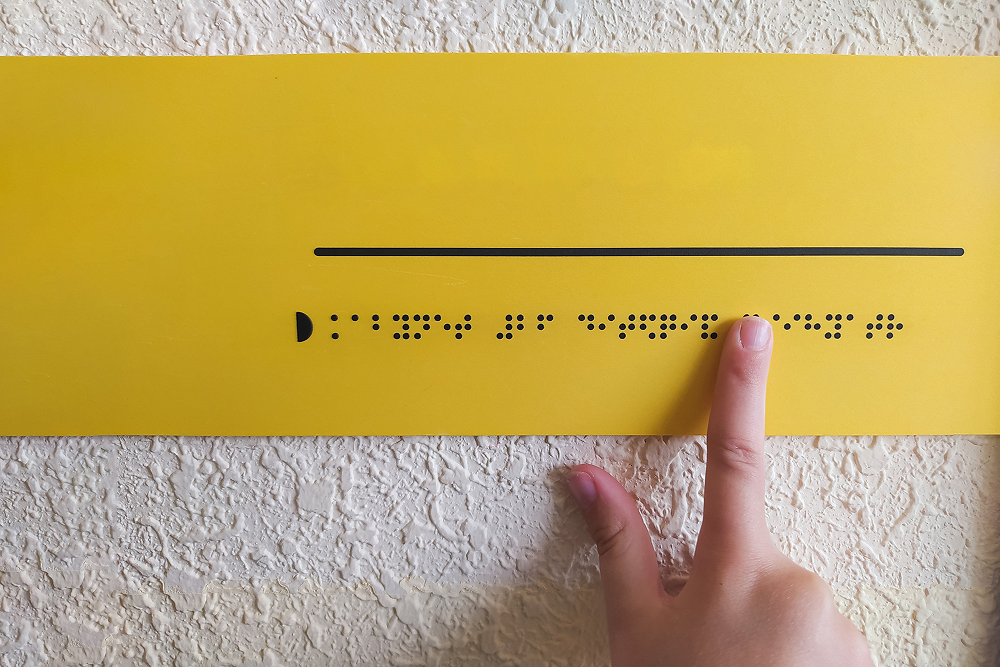
ADA signs follow specific design standards so they are consistent and easy to use. One of the most recognizable features is raised lettering, sometimes called tactile text, which allows people to feel the letters with their fingertips.
Braille is typically placed beneath the main text, giving blind individuals another way to read the sign. The fonts used on ADA signs are simple and clear because decorative or script fonts can be difficult to read.
Color contrast is also important. The background and text must be clearly different from each other so the words stand out. Another key factor is placement. ADA signs are usually mounted beside doors at a standard height so people know exactly where to reach to locate them.
Together, these design elements create a sign that is readable visually and by touch.
Which Office Signs Need to Follow ADA Rules
Not every sign in an office must follow ADA standards. In most cases, the rules apply to signs that identify permanent rooms or spaces.
For example, rooms like restrooms, stairwells, electrical rooms, offices, and conference rooms typically require ADA-compliant signs. These spaces do not change often, so the signage must remain consistent and accessible.
Temporary signs such as promotional posters, event signs, or directional signs used for short periods usually do not fall under the same requirements.
ADA Signage Benefits Everyone
Although ADA signage is designed with accessibility in mind, it improves the experience for everyone who enters a building.
Clear, consistent signage makes offices easier to navigate, especially for first-time visitors. It also helps buildings appear more organized and professional. In emergency situations, well-designed signage can even help people find exits more quickly.
In addition to improving accessibility, ADA compliance also helps businesses meet legal requirements and avoid potential penalties.
Working With Professionals for ADA Signage
Designing ADA-compliant signage involves more than simply adding Braille to a sign. There are detailed guidelines related to lettering size, spacing, contrast, materials, and installation.
Because of this, many businesses choose to work with experienced signage professionals who understand these standards. Companies like Heartland Signs & Graphics help organizations design and install ADA-compliant office signage that meets regulations while still looking clean and professional within the workplace. Contact us to learn more.
With the right signage in place, offices become easier to navigate, more inclusive, and more welcoming for everyone who walks through the door.